
Musings and outbursts, book-related and not

Art of the Raptor
“Birds of prey or predatory birds, also known as raptors, are hyper-carnivorous species of bird that actively hunt and feed on other vertebrates, mainly mammals, reptiles, and smaller birds. In addition to speed and strength, these predators have keen eyesight for detecting prey from a distance or during flight, strong feet with sharp talons for grasping or killing prey, and powerful, curved beaks for tearing flesh.”
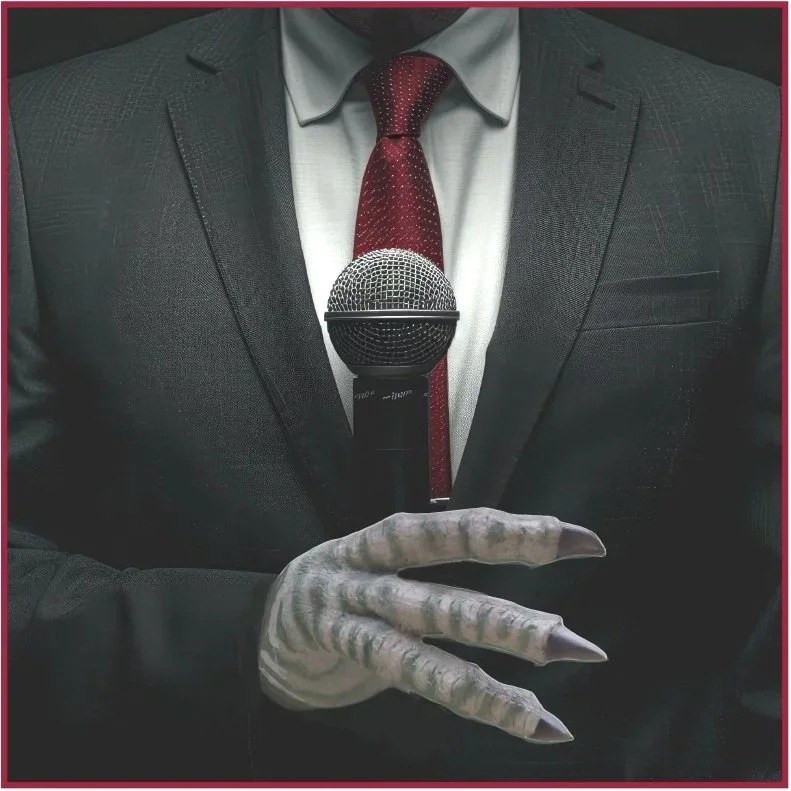
This paragraph opens the Wikipedia article on birds of prey—eagles, hawks, and falcons—those intimidating creatures you see gliding upon air currents with motionless wings before circling low to make a kill. Without apology I am going to edit the paragraph by inserting words about our very own American raptors—those select humans at the top of our government.
These politicians are predatory humans, occasionally known as raptors for the way they treat other humans. They are a hyper-carnivorous species, preferring Big Macs and huge, protein-rich steaks currently at the top of the Health Department’s list of recommended foods. They actively hunt and feed on other humans who don't look and think like they do, or have smaller incomes and less exalted positions. In addition to cookie-cutter arm candy and billionaire strongmen to prop them up, these predators have keen eyesight for detecting vulnerabilities in their prey. They hunt them down mercilessly, using bribes, lies, and camouflage as well as a stacked Supreme Court, subservient cronies from their own party, and the weaknesses of their pitifully misinformed constituents. After flaunting their superiority in raucous magnified screeches, they gerrymander and otherwise manipulate elections to zoom in for the kill. As the final coup de grâce, they tear flesh off the bones of both friend and foe without a stab of conscience or a hint of remorse.
My newest, yet-to-be released novel, Age of Unlove, takes place fifty years from now in the USA, the future fittingly altered to reflect the unkind passage of time and new realities. The characters, plot, and settings spring from the present that I have enjoyed describing in this cathartic, hyperbolic rant.

Phoenix, Margaret's Cat
One day I decided to listen carefully to my cat, Phoenix. He’s a dedicated lap-sitter, and until recently I assumed the noises he was making were ordinary purrs of satisfaction. I didn’t realize he had a lot to say.
When it comes to meowing, Phoenix is the silent type except to express acute annoyance. That means he’ll let out a solitary meow on the way to the vet or groomer. We get it. He’s really pissed off. He doesn’t make demands with meows. A gentle tap with his forepaw on a knee is his way to remind his people that dinner is late. He’s also exceedingly polite. He asks permission to sit on my lap or to enter certain rooms—reminiscent of the child vampire in the Swedish film, Let the Right One In.
On the day I started listening carefully, I discovered that Phoenix hasn’t taken a vow of silence. He’s very vocal, in fact. Meowing just isn’t his thing. Instead, he communicates in a subtle, low-decibel language of chirps, trills, and half-purrs that seem to imitate the rhythm and cadence of human speech. Phoenix isn’t trying for words. He’s no genius—not even by cat standards—and like any feline, he doesn’t have the physical capacity to shape words given the mouth he was born with. These sounds come from deeper down, at the back of his throat.
Now that I’ve learned to listen, he has a remarkably varied vocabulary of murmurs that sound like questions or comments—either to ask for that late dinner or a little love, or to express affection. I try to imitate the language of affection in cat-talk by repeating back what he’s just said, and to my ear, I’m doing a pretty good job. Phoenix is indifferent. Perhaps he detects that I’m a fraud. His remarks are real and from the heart. The best I can do is try to imitate him.

These medusa-like tree roots grow out of a massive stump where a second tree has grown from its left side. Stanley Park, Vancouver
Terrifying Roots
In Day of the Jumping Sun, a handful of humans survive 2050’s WWIII by living in a cavern way up north on Baffin Island. Their descendants remain underground for five hundred years until a religious rift splits the population into two factions. The polytheistic Shade People remain below. The monotheistic Sun People take their chances outside in the vast unknown, becoming hunter-gatherers in the lush pine forests that have sprung up in the mountainous areas of the warming post-apocalyptic isle.
As the Sun People adapt to a new way of life, their religion embraces the forest until it becomes a holy site. This quotation sums up the depth of the Sun People’s feelings. “We love the Forest. We worship the Forest. It is our holy temple where our graves have always been and will be, where our children speak their first words and learn to walk. It is mother and father; it feeds us and instructs us.”
So how do I, mother of the Sun People, feel about forests? I will preface my answer by relating a childhood trauma. When I was about five years old, my family visited Yosemite where we stayed in a cabin at White Wolf Lodge half way between the Valley and Tuolumne Meadows. In the wee hours, I headed for the bathrooms and miscalculated the direction. For what seemed like forever, I crashed about in the dark among the forest trees and at one point squelched through a muddy creek bed. My parents managed to find me without raising an alarm because my mother had sewn jingle bells onto the toes of my slippers.
Don’t get me wrong. I love forests almost as much as the Sun People love theirs. I took daily hikes in Stanley Park’s forest here in Vancouver until the weather turned cold—and I will again in the spring. The forest is huge and hilly with a mountain in the middle, and it’s made up of mainly shaggy old-growth pines interwoven with meticulously manicured trails. I have never seen anyone walking off-trail in the forest. Nor would I walk in it. It is boggy in places and overgrown with giant ferns and weedy bladed grasses in others. Broken, decaying stumps and downed logs are everywhere. And oh, the tree roots! They’re disturbingly gnarled misshapen things as big as houses. Animals are not in evidence, but warning signs stand along the trails. Don’t disturb the this, the that, it’s nesting season, cub season, the birds and beasts are touchy as hell.
Yes, the forest creeps me out. But I am drawn to it nonetheless, and when I’m there and forget the busy roads that are close by and the mountain bikers who sneak up soundlessly from behind, I feel serene, as young as an unfurled fiddlehead. I float along the paths sniffing the piney breeze, my eyes drowning in fifty shades of green. My head is in a good place. But then comes that extra heart thump when I see those ferocious roots or think too hard about what goes on in the bogs.
To me, the forest represents the cycle of life even as it succumbs faster to death.

Margaret Panofsky is dwarfed by the god Pan, her namesake
Why Mythology?
When I was a child, I soaked up the ancient Greek myths and epic adventures that my mother read aloud as bedtime stories. Until a rotation system was established, the five of us kids would vie vociferously for the coveted spots on either side of her. Then we would enter a world of glorious and inglorious extremes—mayhem, murder, sexual exploits, and outrageous indignities—even though the tales within the beautifully illustrated books, Metamorphosis, the Iliad, and the Odyssey, had been cleaned up sufficiently for our young minds. I remember crying when the victorious and spoiled Achilles dragged Hector’s body behind his chariot around the walls of fallen Troy.
As in many myths and sagas, the backbone of The Last Shade Tree is the hero’s quest or journey—which moves externally within the world, and internally within the self. Sequoyah, who is my hero, resembles two mythological heroes, Moses and Ulysses. The first hero leads his people to a new place, and the second hero spends many years seeking a way home as he cares for his band of similarly stranded adventurers.
Sequoyah’s story begins when he is four years old and an unwilling captive in a Cherokee boarding school. When he is eight, he composes a poem: “Old Man Moses ate the roses, /Meanie Matron broke his noses.” It seems like a nonsense rhyme, but it is not. The child Sequoyah is already a poet who tries to cope with his experiences and assimilate the beauty he sees around him. He is prevented from doing so by the Establishment that breaks him in every way possible. Did Sequoyah know what his poem meant? Probably not, but it is his first creation, and it mentions one of the heroes that he will emulate eventually when he and his small band of fellow travelers journey to the future.
Ulysses, on his way home from Troy, had to choose between the wrath of one or the other of two sea monsters, Charybdis or Scylla. In fact, one of my novel’s final chapters bears their names. Sequoyah’s “Charybdis and Scylla moment” happens in the previous chapter, “Babloons,” when he faces two options: to either accept or reject help from the future world’s dominant species, creatures highly evolved from their original kind. The choice is rigged, of course: each option is equally awful. He decides to accept their help, and this decision protects the clan members from the coming winter. But it comes at the expense of their freedom. For better and worse, it is the logical choice for a person with his caring nature.
The heroine’s name, Aleta, means “traveler” in Greek, and she, too, participates in multiple journeys, both real and symbolic. Aleta and Sequoyah, husband and wife, must mimic Ulysses’ journey home, but not to a real place. Their journey is internal—to the symbolic centers of their joined hearts.
Real myths that are interwoven throughout the book include two Cherokee stories: “The Haunted Whirlpool” and “Cherokee Rose.” Both occur at significant turning points. In “The Haunted Whirlpool” Sequoyah sees his future in a vision, and in ”Cherokee Rose” his teenage daughter, Svnoyi, who is both as fragile and as tough as the flower in the myth, understands how her future will tie to his. Many myths appear as passing references, some serious, others, cynical jests: The myth of Sisyphus, Hercules and the Augean Stables, Leda and the Swan, Niobe and the death of her children, and many, many others.
I came to realize as I worked that perhaps the strangest achievement in my novel is the evolution of new myths. Many of these spring from the horrors of true historical events: the magic wolf pack during the WW II persecution of the Roma or the tale of the golden eagle pair on the Cherokee Trail of Tears. A most powerful mythological figure is Aleta’s almost animate Italian violin, made in 1838, the year that coincides with the Trail of Tears. It often screams when the people in its life are suffering. There on the Trail, Sequoyah’s great-great-great grandmother had tied a rope around the neck of the violin case, and she “drug it, that thing howlin’ up a storm inside, all the way to Oklahoma like a pup on a leash.”

George Washington owned slaves, a fact not mentioned in the author’s history books. This painting by Junius Brutus Stearns (1851) is in a disturbingly bland pastoral style. Public domain, via Wikimedia Commons
What? Never Heard of It
Looking back, I now see my high school history classes as one big maneuver to avoid the ugly facts from our nation’s past. Was my generation shielded from harsh realities that later generations of students would hear about with the misguided but honest motive of protecting the young? I suspect that it was due to something worse and intentionally dishonest; suppressing uncomfortable facts was simply the policy of the time. Education for the young put forward nice-sounding myths about our country’s virtues and achievements over its blind spots, failures, and atrocities. Here’s a glaring example. George Washington, who has been elevated to American sainthood as the nation’s first president, was a slave owner.
When my heroine Aleta is forced to time-travel back to the week before Pearl Harbor, she learns first-hand of the compulsory internment of Japanese American citizens: “Aleta frantically scoured her memory for what she’d learned in her high school history class [in about 1960], but she could not recall a word in her textbook about this human catastrophe.”
When I started writing The Last Shade Tree, I had no idea that I’d be tackling the horrors of recent history. But as the books began to stack up on my desk and my research intensified, I grew more and more aware that too many dreadful episodes had been swept under the rug. So I came up with the time-travel concept so that my heroine and hero would experience personally some of the atrocities that had been kept from us or glossed over.
I believe facing this history is especially urgent today as our world lurches again toward exclusiveness, racial hatred, totalitarianism, and, worst of all, nuclear war. Some of the book’s episodes are better known than others, such as the Japanese internment after Pearl Harbor and the Cherokee Trail of Tears. But are they known well enough? And what about Drancy, the Indian boarding schools discontinued only late in the last century, or the Roma in Nazi camps? Add in the right-wing historical revisionists, and I just can’t shake feeling that we as a nation are in big trouble.

Northern lights on a starry winter night
From Bad to Worse
How did I dream up The Last Shade Tree, a strange book by any definition? When I was fifteen, a frightening polar-route flight home from Europe to San Francisco forced an emergency landing at the US air force base in Frobisher Bay, Canada (now Iqaluit), near the Arctic Circle. It was mid-winter. Shivering in the sub-zero air, I was amazed by the intensity of the Northern Lights. I decided to write about it one day. Many years later, pieces of that experience have inspired several chapters.
But as I’ve grown older and more aware, what has surely shaped my book’s unusual story are my fears for our future. I have watched the world lurch from bad to worse to bad and back again—more times than I can count. And so I decided my characters would convey a message: that humans don’t seem to learn from the past horrors they’ve either created or lived through—except briefly at best. Soon the well-intentioned agreements and treaties begin to unravel until the world finds itself in worse shape than before, whether through hubris, greed, or the mind-boggling limitations of our world’s leaders.
Still, I wanted to write a novel, not a piece of forbidding non-fiction. So I came up with a story that would be thought-provoking and a great adventure at the same time. I hope I’ve succeeded, and that The Last Shade Tree will sweep you off your feet as you share my characters’ extraordinary journey across the world and through time.

The five-foot tall, authoritarian prairie dogs in Day of the Jumping Sun aren’t cute like these
How I Fell in Love with Prairie Dogs
I met live prairie dogs for the first time in New Mexico in 2015 in an unnatural setting. About twenty of them had been transported to the middle of a shopping mall where they puttered about in an artificial enclosure of concrete walls painted brick-red. The little creatures were fat and cuddly, sitting tall on their hind legs and kissing each other beguilingly. My second, more unhappy encounter was a few weeks later on the highway to Angel Fire, NM, where I saw dozens of the poor beasts flattened along the road. In that mountain resort town, grassy acre fields sandwiched between housing developments contained prairie dogs who would briefly pop frightened faces above the dirt mouths of their burrows.
I read up on the Prairie Dog, genus, cynomys; order, rodentia, and instantly made up my mind to feature these amazing animals in an apocalyptic science fiction novel. If they happened to get big, say, reaching five feet and becoming ultra-smart, their natural characteristics would make them formidable equals to any humans lucky enough to survive Armageddon. To list a few of these traits, the little creatures of today have a sophisticated language of yips and barks that a few scientists claim to have deciphered. Their family structure is complex and hierarchic. Their communal society—with duties strictly assigned—rivals the organization of the Roman Empire. And they have a penchant for cruelty, too, at least in human terms. They practice infanticide, which somewhat dilutes their cuteness.
And so I set the four-way stage. Start with the oversized and brilliant Prairie Dogs. Then add the human survivors, rivalrous Shade People and Sun People. To complete the mix, bring in confused time travelers. Come join the romp in Day of the Jumping Sun.

The Complete Works of Shakespeare stands in the midst of the author’s “Beloved Books”
Romeo and Juliet: Disordered by a Play
I was a normal child until age eleven when I got severely bitten by Shakespeare’s Romeo and Juliet. To be fair, I was no child prodigy: I saw the movie first. The very next day I read the play and in my high school years, I wept over pages 1007 to 1044 so many times that they nearly fell out of the family’s Complete Works of Shakespeare. At some point I realized that I’d memorized the entire play. In addition to leaving me with a serious case of Hopeless Romanticism that would distort many a youthful love relationship, the play also determined my life’s work. Although early music extends well beyond the Age of Shakespeare, my love of the period must have influenced my choice to play the viola da gamba professionally. But eventually Shakespeare’s lines invaded my everyday thinking: the magical lilt of iambic pentameter and the extraordinary lure of gorgeous phrases cried out, Write! My first novel The Last Shade Tree has quotes and misquotes from Romeo and Juliet subtly hidden throughout. In the disordered world of today, I feel blessed to have found a lifetime of solace in an equally disordered piece of literature.

Sailboat wreck at Vancouver’s English Bay
Story of a Sailboat
A wintry sun is setting over Vancouver’s English Bay, and the tableau of a sailboat stuck on the shore beyond the seawall is sad to see. Sad certainly, but my fellow gawkers are also shaking their heads, embarrassed for the sailboat’s owners. How careless of them, what a big oopsie. Clearly the sailboat hadn’t been secured properly and had broken free. She’d scudded across the bay the night before, unmanned and with the sails down, propelled by higher-than normal winds. She had run aground. And now that the water is at its lowest, she perches precariously among the rocks and tide pools for all to scrutinize. She’s a twenty-foot maiden with her bottom exposed, her dignity lost.
A few days later, the sailboat is still there. But ominously for her, she’s flipped over to her other side. Her mast that used to point toward the shore now signals the water. Perhaps she’s asking to go home in the mute voice of an inanimate object.
Days pass. The sailboat is unstable, rapidly turning into a shipwreck. The maiden’s mast has been sheared off. The rest of her is lodged against the seawall, her journey at an end because she can travel no further. Even the fierce winds and waves of recent days couldn’t push her through stone. But the waves can still crush her. Then she’ll be so much fiberglass, resin, wood, foam, and metal—no longer a “she,” but a big industrial mess.
I spoke too soon. This morning the sailboat is gone. She’s either at the bottom of English Bay or at the junkyard. But just maybe—ah, wishful thinking—she’s at the boat repair shop. Her mast is being replaced, her hull mended, she’s being cleaned and refurbished inside and out. If there’s a second chance for the maiden, please, owners, take the time to dock her properly. Because now lots of people have indulged her with their concern, affection, and tender sympathy—as if she were alive.